Monday, March 28, 2011

Status, access, power and stuff?


I recently heard a news story on the radio about a new way to encourage people to obey the law.  You can see the story for yourself here.  It seems that some communities are giving REWARDS for people who OBEY the speed limit.  The law-abiding citizens get to split a pot of money, if they are selected in the lottery of speed limit following drivers.  The money comes from a portion of fines levied against speeders. 


The guest for the story, Gabe Zichermann, said this type of thing is popular because we are motivated by four things: status, access, power and stuff.   Zichermann may be correct in that assertion.  But are these the principles by which we should be guided?


It is as simple as looking at the story of the Good Samaritan.  (You can read the story for yourself here.)  Jesus told the story of a man who was lying on the roadside, having been beaten and robbed, and unable to move.  The righteous and religious people passed him by--probably afraid of putting themselves in a precarious situation.  But a Samaritan stops to help.  Samaritans were despised and looked down upon by Jesus' first hearers.  A Samaritan as the hero of a story turned all their expectations upside-down.


The Samaritan picks up the victim of the road-side crime and cares for him.  Then he takes him to the an inn and pays for everything.  He puts down enough money for the man to stay as long as he needs.  The Samaritan tells the inn keeper, "Anything else he needs, put it on my tab."  


Jesus finishes the story with this charge: "Go and do likewise."  No rewards, no status, no access to special privileges, no power, no stuff.  The Samaritan decided to shun all postions of status, access, power and stuff to show true compassion and justice.


The Gospel's Call is to forgo the desires for the temporal things that come with status, access, power and stuff.  That's much easier said than done.  But Jesus commanded us to do so.  Therefore He will make the way for us to do so, when we follow His Call.  


As Brian Russell says, "The status we embrace establishes the limits of our ability to reach others with the Gospel."  Emptying ourselves of status always increases our ability to show God's compassion and justice.

Thursday, March 24, 2011

What would fear drive you to do?

While waiting for a train to take him from Chattanooga to Memphis on July 4, 1956, a trip of some 400 miles, Elvis sits at the lunch counter to have some breakfast. The woman standing had ordered a sandwich for which she was waiting, but was not able to sit at the counter.


While waiting for a train to take him from Chattanooga to Memphis on July 4, 1956, a trip of some 400 miles, Elvis sits at the lunch counter to have some breakfast. The woman standing had ordered a sandwich for which she was waiting, but was not able to sit at the counter.


A part of our human condition is fear.  Fear can be a healthy thing.  It can keep us out of dangerous situations and preserve life and limb.  However, history has shown that fear can also get the best of us.  Fears, when they are out of control, can lead us to say destructive things, to hurt others, or try to eliminate entire groups of people.
Racial segregation comes quickly to mind.  We’ve suffered from this fear lived out, not just in the South, but across the nation.  We can fear that which is different from us when do not seek to understand it.  Fear of other people has lead us to war throughout time.  It led to mass persecution of Christians.  These are only to name a few.

Jesus faced the wrath of another’s fear.  In the early morning hours of the day of His crucifixion, Jesus was the subject of a farce of a trial at the home of Caiaphas the High Priest.  The religious leaders were afraid of what Jesus might be--the Messiah that did not come as they expected He should.  Jesus was so much more. They feared His words that might even condemn their self-righteousness.  They feared what His teachings might require of them. Their fears led them to condemn an innocent man to die a horrible death.


What do we do with our fears?  Do we face them with the love that Jesus taught and lived?  About this love with which Jesus responded, the Bible says: “There is no fear in love. But perfect love drives out fear, because fear has to do with punishment. The one who fears is not made perfect in love.” 1 John 4:18.


Tuesday, March 15, 2011

Does Agony mean Defeat?


Vinko Bogataj of Yugoslavia at a ski jumping 
event in Oberstdorf, West Germany in 1970.

From when I was a boy, I remember weekends and watching sports with my dad.  From the television, I could hear the familiar intro music to “ABC’s Wide World of Sports.”  Jim McKay promised us that they were “spanning the globe” to bring us “the thrill of victory and the agony of defeat.”  I always made it in the room in time to see a great ski jumper have a bad run and wipe out on the slope and into the crowd.  I don’t remember his great jumps, but we remember him for his failed attempt that day.


We all face such agonies.  We have done our best time and time again, then we face a difficulty that sets us back.  Sometimes this is of our own doing.  Sometimes it is by things beyond our control.

However, agony does not have to mean defeat.  What we do in the midst of the agony determines defeat or victory.  Yes, there are agonies we bring upon ourselves: the consequences of poor choices, running after things of the world, etc.  There are agonies that happen to us beyond our control, for example a change in health, the loss of a loved one, a natural disaster like in Japan recently.  But how will we respond in those agonies?


Jesus was in agony as He prayed in the Garden of Gethsemane late Thursday night and early Friday morning of what we call Holy Week--the week before Easter.  He was in agony in the deepest way--praying until His sweat came like drops of blood.  His response to the agony was to throw Himself into prayer and upon the will of God, His Father.


The agony did not immediately pass, but He was sustained in the middle of it.  The will of God brought forth more victory than an immediate fix to the agony.  Though it appeared that all was lost, God never abandoned His Son.


He offers the same for us and for those in the midst of agony around us and around the world.  How will we respond?  Will we, as Jesus did, throw ourselves to the will of God?  Will we offer hope and comfort to those who are in agony now?  Will we demonstrate that agony does not have to mean defeat?

Saturday, March 12, 2011

United Methodists Respond to Emergency in Japan

United Methodists respond to emergency in Japan


The United Methodist Church has been at work in Japan for several years. The United Methodist Committee On Relief is connecting with our partners to assess the damage resulting from the earthquake and tsunami in Japan. We are holding all affected in prayer. To support UMCOR's response to emergencies like this please give to Pacific Emergency, UMCOR Advance #3021317.


100% of your donations go directly to the relief work with
NO ADMINISTRATIVE COSTS withheld.

We continue to be respond to the needs for the months and years to come and will seek to follow God's leading to bring hope and restoration to the people of Japan.

Thursday, March 10, 2011

What memories define you?


Memories are a powerful thing.  The memory of an event can alter a life.  The emotions associated with a memory can paralyze use or empower us to change the world.  How we allow those memories to define us can influence the decisions we make for a lifetime.
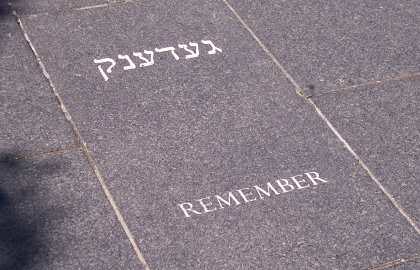
The Christian tradition is full of memories.  We inherit it from our roots of Judaism.  The memory is an important part of the Jewish past as well as the future.  This is apparent if you visit the Holocaust Memorials.  I’ve seen the one in Washington, D.C. and in Jerusalem. The overall message is: REMEMBER so that this will never happen again.
We also should remember certain events so that they DO happen again.  Certainly Jesus had this in mind at the Last Supper.  He was celebrating the Passover meal with His disciples.  The Passover is all about memories and tradition.  We are to remember that God’s people were slaves, but now are free.  In much the same way Jesus was declaring to the people that they were once slaves to sin and death, but He was about to set them free in ways they could never imagine.
We remember this still when we celebrate Holy Communion.  Jesus told us to do this in remembrance of Him.  He gave the disciples the cup on that Thursday night and told them it was a New Covenant offered to them.  Certainly they must have remembered the words from the prophet Jeremiah, 

31 “The days are coming,” declares the LORD,
   “when I will make a new covenant
with the people of Israel
   and with the people of Judah.
32 It will not be like the covenant
   I made with their ancestors
when I took them by the hand
   to lead them out of Egypt,
because they broke my covenant,
   though I was a husband to them,”
            declares the LORD.
33 “This is the covenant I will make with the people of Israel
   after that time,” declares the LORD.
“I will put my law in their minds
   and write it on their hearts.
I will be their God,
   and they will be my people.
34 No longer will they teach their neighbor,
   or say to one another, ‘Know the LORD,’
because they will all know me,
   from the least of them to the greatest,”
            declares the LORD.
“For I will forgive their wickedness
   and will remember their sins no more.”
What memories define us?  Hurtful memories of the past?  Or memories of a God who gave His all for us?  What will we do with those memories and how will we let God use them to change us and the world?
I look forward to exploring these with you this Sunday.

Friday, March 04, 2011

Give up or Pick Up?

For many years, I've heard my friends and colleagues talk about what they were going to "give up for Lent."  Everything from Cokes to chocolate to lima beans made the list.  It took me a while to understand why one would shun something for more than a month.  It seemed more as a badge of honor that one could be so disciplined.


These days I view the period of Lent differently.  I see it as a time of preparation and renewal.  In the early Church, those last 40 days before Easter were used for intense preparation.  For a period of time, baptisms only took place on Easter morning.  Some of the candidates for baptism had prepared for a year for this day.  The last 40 days were a time of even more serious preparation.  On the Saturday night before Easter, they would go to the church and, approaching the baptismal from the west, were baptized.  They would rise facing east, at dawn on Easter morning.  They entered in darkness and rose in the light of Easter.  They gave up themselves and picked up Christ Himself.  Those who were already Christians also entered into a time of reflection and preparation, remembering their own baptisms and the life they celebrate.


So this Easter, I'm not only giving up (myself at a new depth I hope), but also seeking to put on more of Christ Himself.  I going to make the Wesleyan Covenant Prayer a regular part of my daily routine.  May we together embrace the light that Christ offers anew this year.


I am no longer my own, but thine.
Put me to what thou wilt, rank me with whom thou wilt.
Put me to doing, put me to suffering.
Let me be employed by thee or laid aside for thee, exalted for thee or brought low for thee.
Let me be full, let me be empty.
Let me have all things, let me have nothing.
I freely and heartily yield all things to thy pleasure and disposal.
And now, O glorious and blessed God, Father, Son, and Holy Spirit, thou art mine, and I am thine.
So be it. And the covenant which I have made on earth, let it be ratified in heaven.  Amen. 

Wednesday, March 02, 2011

Lent 2011

Many of us have different expectations or understandings of the Season of Lent. Lent can be a very meaningful time of Spiritual Growth. Lent is a time of preparation for the initiation of people into the Christian life in baptism. It is also a time for the church to journey together toward Easter and the reaffirmation of the baptismal covenant. Lent is not about being miserable, sad, and funereal in anticipation of Good Friday. The Sundays of Lent are not part of the forty days of Lent and so remain "little Easters," as are all Sundays. Fasting and giving up something can be part of Lenten disciplines, but so can taking on some things. Have you considered some ways to connect worship and daily growth in spiritual, relational, emotional, and bodily fitness?
This Lenten Season, I want to encourage to you take a new approach to this holy time. I want to encourage us to grow together again this year. Below is a great opportunity for this period of spiritual reflection.  I offer a chance for you to make a new commitment this year.  Print out this page and put it somewhere that you'll see it each day during Lent.


My Preparation for Easter
Lent is a time to prepare for Easter. It is a necessary prelude. The death and resurrection of Christ are true whether or not I prepare for Easter. However, without my heart and life being ready, I may not experience the depth and power of Christ's death and resurrection. So with my brothers and sisters, I commit myself to disciplines for conversion from sin and death to love and life in Jesus Christ. With the aid of the list below, I make the following commitments to discipline and growth for the next six weeks:
(Check the ones you desire or feel prompted to do; circle the ones you then decide to do.)


Inward and Personal Disciplines
___ Spend time in solitude each day.
___ Commit to participation in weekly worship.
___ Commit to the suggested weekly Bible readings.
___ Read twice through the Gospel of Mark.
___ Begin to keep a journal of prayer concerns, questions, reading.
___ Faithfully read and reflect upon the Lenten Devotional Guide.
___ Focus on thanksgiving, rather than on asking, in prayer.
___ Give myself a gift of three hours to do something I always say I don't have time to do.
___ Find a way to go to bed earlier or sleep in so I get enough rest.
___ Make a list of people with whom I need to be reconciled. Pray for them and let Jesus guide me in my thinking and feeling toward them.
___ Allow God to take control of my life by ______________.
___ Go to all of the Holy Week services as an act of love and waiting with Jesus.
___ Take one hour to prayerfully inventory my priorities and plan how I will reorder them.
___ Give up a grudge or a rehearsal of a past event.
___ Forgive someone who has hurt me.
___ Turn off the TV, computer, etc. for ________ hours a week that I would otherwise spend with it on.
___ Other promptings:


Outward and Social Disciplines
___ Take on some loving task:
___ Plan to visit a "shut-in" neighbor or church member weekly.
___ Agree to serve in an area of the church that God has been prompting me to do so.
___ Write a letter of affirmation once a week to a person who has touched my life.
___ Listen and respond to Christ's call to a ministry of service:
___ Go to coffee or dinner with someone I want to know better and grow together in Christ.
___ Give blood and recall the cross.
___ Call the local food pantry or homeless project and ask how I can help.
___ Say "NO" to something that is a waste of money and time.
___ Pray to God to help me resist racial prejudice and to give me courage in opposing it.
___ Decide to become a member of the church and speak to a pastor and participate in the Membership Exploration.
___ Rebuke the spirit of criticism and my own tongue out of control.
___ Find a way to live out the baptismal promise to "resist evil, injustice, and oppression" in the power and liberty God gives us by:
___ Other outward and social promptings:
As a way of being accountable, I will share my plan with at least one other faithful Disciple of Jesus and share with that person my experience of Lent during Holy Week.
(signed) __________________________ (date) _____________

Tuesday, March 01, 2011

Blog 2.0

I have to admit that I've neglected my blog for quite some time.  I do apologize and I appreciate those that have stopped by.

I'd like to give this another go.  In the coming weeks, I look forward to interacting with you again in the blogosphere!  Be patient with me. :)

Wednesday, December 08, 2010

Third Sunday in Advent--Joy

This third week of Advent celebrates the Joy that Christ brings. What is the difference between joy and happiness?

Sunday, December 05, 2010

Second Sunday in Advent--Peace

Something to ponder this week:

If peace were to show up at your door, what would it look like?

Sunday, November 28, 2010

First Sunday in Advent--Hope

I'd like to see if we can generate some discussion through our Sundays in Advent. Let's try something new:


Today is the First Sunday in Advent; we celebrate the Hope that comes at Christmas time. What is your deepest hope this Christmas?

Saturday, August 28, 2010

Back to Basics, Part 3


We continue with week 3 of our study of the Apostle's Creed. This week we focus on Living with Jesus as Savior.
Countless books have been written about Jesus. No other life or death has affected history and humanity like Jesus' has. But what are we to do with that? The writers of the Apostle's Creed felt it was important to deal with His life, death, and resurrection as a cornerstone of the Creed. Have you notice the Creed deals with Jesus more than anything else?
It reminds me of one of my favorite passages by C.S. Lewis. I offer to you for your reflection:
"I am trying here to prevent anyone saying the really foolish thing that people often say about Him: “I’m ready to accept Jesus as a great moral teacher, but I don’t accept His claim to be God.” That is the one thing we must not say. A man who was merely a man and said the sort of things Jesus said would not be a great moral teacher. He would either be a lunatic—on a level with the man who says he is a poached egg—or else he would be the Devil of Hell. You must make your choice. Either this man was, and is, the Son of God: or else a madman or something worse. You can shut Him up for a fool, you can spit at Him and kill Him as a demon; or you can fall at his feet and call Him Lord and God. But let us not come with any patronising nonsense about His being a great human teacher. He has not left that open to us. He did not intend to."
Lewis, C.S. The Complete C.S. Lewis Signature Classics. HarperCollins: San Francisco. 2002.
**You'll fin that paragraph in Lewis' Mere Christianity, Book 2, Chapter 3: The Shocking Alternative.

You can find our messages on our website: www.fairhopeumc.org or on iTunes.

Wednesday, August 18, 2010

Back to Basics, Part 2


Back to Basics, Week 2
In our second week of a four-week study of the Apostle’s Creed, we move to “I Believe in God the Father, Creator of Heaven and Earth.” There are quite a few powerful terms in that phrase.
God--Who is God? What is God to you? Who are you to God? What are you to God? What if we started to ask some of those basic questions of our relationship? How would we answer?
Father--Father is a loaded term to many of us. Father can have positive or negative connotations. What would it mean if we could call God our Father? What would He mean to you? What would you mean to Him?
Creator--What does it mean to Create? If you’ve created something, what do you leave in it? What does it do to you?
Heaven--What are your thoughts on Heaven? Is a place? A thing? A concept?
Earth--Is that the opposite of Heaven? The compliment of heaven? Both? Neither?
I’d love to hear your thoughts on these. Post them here or send a message.

Would you explore these questions with me and more this week? This Sunday morning we’ll try to see what it would mean for us to live out this Creed. I hope to see you then.

Our sermons are available online at www.fairhopeumc.org and on iTunes.

Wednesday, August 11, 2010

Back to Basics, Part 1


Do you have a creed? Better yet, do you know what your creed is? The Oxford English Dictionary says that a creed are “those articles of belief which are regarded as essential.” What are the essentials of your belief? What are the things at your very core? Can you articulate what is at the very foundations of your belief? Have you ever tried?
It is back to school time here. This is a fun time of year of newness and excitement. I remember when school started each year, we started with the basics of our new subject. What do you need to know to learn and use the things you’ll learn?
This week we kick off a new series called “Back to Basics.” We’ll use this back to school time to examine our creed: what are the articles of belief which are essential to us? So we ask one another: what’s your creed? Why not share it with us and begin the discussion? Then let’s look at creed together this Sunday.

Thursday, August 05, 2010

Get out of the Boat, Part 4


This week we conclude our four-week series “Get out of the Boat.” We’ve examined how Peter heard Christ call and got out of the boat onto a raging sea. We’ve looked at Jonah’s realization that running from God was hurting him and those around him. We’ve looked at Samuel’s call from God to lead the people of Israel.
One part we haven’t discussed yet is the group that watched Peter step out onto the water that night. What about the other disciples? What were they thinking? What would they have said? We can only speculate. But let me ask you--what would you say if you saw someone get out of the boat and onto the waters in the middle of the night? Would you applaud him? Tell him he’s crazy? Wait for him to fail? Hope you didn’t hear the call too?
Maybe it is time we examined our own lives and find out where we’d fit into that picture. Christ IS calling each and every one of us to follow him. Will we GET OUT OF THE BOAT?
You can hear our messages on our website www.fairhopeumc.org or on iTunes.

Thursday, July 29, 2010

Get out of the Boat, Part 3


What do you do when you heard God call your name? Would you answer? Would you run? Would you pretend you didn’t hear Him and go about life as usual?

In The Gathering service this week, Gabe Holloway, Director of Youth Ministries, is preaching. Together we’re going to examine what it means when God calls your name. This is Gabe’s last Sunday with us. He’s headed to Asbury Seminary in Wilmore, Kentucky. He and his wife Lynne have God called their names. They’ve answered the call to this next stage in their ministry together. Please join us in prayer for Gabe, Lynne and Sara at this very exciting time in their lives. You can hear this message, and all of our messages, on our website www.fairhopeumc.org or on iTunes.

Saturday, July 24, 2010

Get out of the Boat, Part 2


Get out of the Boat, Part 2
July 25, 2010

From the time I was very young, I heard the story of Jonah in the Bible. I remember pictures in children’s books of Jonah in a boat, inside the belly of a whale. He had a candle in his hand and he looked around at this situation with great wonder and uncertainty.

I don’t remember learning as a child how Jonah came to be inside the belly of the fish. What was he doing in the water in first place? It is great that God protected him from the ocean, but how did he get there?

Sunday, July 25, we’ll examine how Jonah came to be there. We’ll also talk about the time that Jonah knew that he had to GET OUT OF THE BOAT. I wonder if we might find ourselves (or have found ourselves previously) needing to get out of the same boat Jonah left.

If you want to read it for yourself, read the story of Jonah in the Old Testament. You’ll find it in the book of…Jonah. It is just four short chapters. Then, I encourage you to compare that to Paul’s statements in Philippians 3:7-11. As always, you can listen to the messages on our website: www.fairhopeumc.org/mediapulpit or on iTunes.

Saturday, July 17, 2010

Get out of the Boat, Part 1


I love the story of Peter in the New Testament. Peter was a key part of his family’s fishing business. One day, he was cleaning up the boats, just as he had done every other day and he sees a different sight. Someone new has moved to town and this new person, Jesus, is teaching a large group of people. The crowd is so large that Jesus borrows one of Peter’s boats to use a speaking platform.

The encounter that follows changes Peter’s life. He abandons the only life he has known and begins to follow Jesus. But that’s not the most amazing part. The most amazing part is when Jesus tells Peter to GET OUT OF THE BOAT. Jesus tells Peter to step out of a perfectly good boat and walk to Him. What did Peter know or see that he would get out of the boat for? What would it take for us to get out of our boats? This week let’s examine what it would take. Be sure to read it yourself. You’ll find the story in Matthew 14:22-33.

You can hear this message at www.fairhopeumc.org/MeidaPulpit or on iTunes

Thursday, July 01, 2010

July 2010

I hope that you are enjoying your summer. It is a time when we tend to focus on spending time with family, enjoying lazy summer days, and hitting the road. I pray safe travels for those of you on the road. I want to encourage you to be faithful in worship this summer when you travel and especially when you're home. If you have out of town company with you, bring them to church!

On July 18 we'll begin a new series: Get Out of the Boat! We'll talk about what it means to be someone who's unafraid to put faith and action together to do the improbable or unlikely!

I look forward to seeing you in worship and out enjoying the summer.

Thursday, June 03, 2010

Unseen Power Series--The Spirit Goes Before Us

The Spirit Goes Before Us
Unseen Power Series
June 6, 2010

We continue our series on the Holy Spirit. We’ve established the coming of the Holy Spirit on the consecration of the Church at the first Christian Pentecost as recorded in Acts 2. Last week we discussed the nature and person of the Holy Spirit. Now we examine what happens when the Spirit is at work in our lives before we realize it.

This week church is abuzz with preparations for Vacation Bible School. Next week the children will follow the journey of Joseph as told in the Old Testament book of Genesis chapters 37-50. Joseph had dreams from God that told him that he was headed to important things. He had a vision for what was to be. However, the journey wasn’t exactly what he may have anticipated.

Joseph’s brothers sold him into slavery because of their jealousy of him. He was shipped off to Egypt and worked in the house of a leader there. He was framed for a crime and sent to prison. Though he was later assured of his release, he was forgotten and forsaken in prison, though he was not forsaken by God.

Through an amazing series of events, Joseph sees the fulfillment of God’s vision for his life. The relationship with his brothers is restored and he saves thousands of people from a wide-spread famine.

In the darkest parts of Joseph’s life, he may have never seen God at work in his circumstances. But Joseph would later tell his brothers: “Even though you intended to harm me, God intended it for good…” Genesis 50:20. What did Joseph know that could give him such faith? He knew the Spirit is at work before we ever know it. Let’s explore how the Spirit is at work in our lives this Sunday.

You can find our sermons online at www.fairhopeumc.org and iTunes.

Monday, March 28, 2011

Status, access, power and stuff?


I recently heard a news story on the radio about a new way to encourage people to obey the law.  You can see the story for yourself here.  It seems that some communities are giving REWARDS for people who OBEY the speed limit.  The law-abiding citizens get to split a pot of money, if they are selected in the lottery of speed limit following drivers.  The money comes from a portion of fines levied against speeders. 


The guest for the story, Gabe Zichermann, said this type of thing is popular because we are motivated by four things: status, access, power and stuff.   Zichermann may be correct in that assertion.  But are these the principles by which we should be guided?


It is as simple as looking at the story of the Good Samaritan.  (You can read the story for yourself here.)  Jesus told the story of a man who was lying on the roadside, having been beaten and robbed, and unable to move.  The righteous and religious people passed him by--probably afraid of putting themselves in a precarious situation.  But a Samaritan stops to help.  Samaritans were despised and looked down upon by Jesus' first hearers.  A Samaritan as the hero of a story turned all their expectations upside-down.


The Samaritan picks up the victim of the road-side crime and cares for him.  Then he takes him to the an inn and pays for everything.  He puts down enough money for the man to stay as long as he needs.  The Samaritan tells the inn keeper, "Anything else he needs, put it on my tab."  


Jesus finishes the story with this charge: "Go and do likewise."  No rewards, no status, no access to special privileges, no power, no stuff.  The Samaritan decided to shun all postions of status, access, power and stuff to show true compassion and justice.


The Gospel's Call is to forgo the desires for the temporal things that come with status, access, power and stuff.  That's much easier said than done.  But Jesus commanded us to do so.  Therefore He will make the way for us to do so, when we follow His Call.  


As Brian Russell says, "The status we embrace establishes the limits of our ability to reach others with the Gospel."  Emptying ourselves of status always increases our ability to show God's compassion and justice.

Thursday, March 24, 2011

What would fear drive you to do?

While waiting for a train to take him from Chattanooga to Memphis on July 4, 1956, a trip of some 400 miles, Elvis sits at the lunch counter to have some breakfast. The woman standing had ordered a sandwich for which she was waiting, but was not able to sit at the counter.


While waiting for a train to take him from Chattanooga to Memphis on July 4, 1956, a trip of some 400 miles, Elvis sits at the lunch counter to have some breakfast. The woman standing had ordered a sandwich for which she was waiting, but was not able to sit at the counter.


A part of our human condition is fear.  Fear can be a healthy thing.  It can keep us out of dangerous situations and preserve life and limb.  However, history has shown that fear can also get the best of us.  Fears, when they are out of control, can lead us to say destructive things, to hurt others, or try to eliminate entire groups of people.
Racial segregation comes quickly to mind.  We’ve suffered from this fear lived out, not just in the South, but across the nation.  We can fear that which is different from us when do not seek to understand it.  Fear of other people has lead us to war throughout time.  It led to mass persecution of Christians.  These are only to name a few.

Jesus faced the wrath of another’s fear.  In the early morning hours of the day of His crucifixion, Jesus was the subject of a farce of a trial at the home of Caiaphas the High Priest.  The religious leaders were afraid of what Jesus might be--the Messiah that did not come as they expected He should.  Jesus was so much more. They feared His words that might even condemn their self-righteousness.  They feared what His teachings might require of them. Their fears led them to condemn an innocent man to die a horrible death.


What do we do with our fears?  Do we face them with the love that Jesus taught and lived?  About this love with which Jesus responded, the Bible says: “There is no fear in love. But perfect love drives out fear, because fear has to do with punishment. The one who fears is not made perfect in love.” 1 John 4:18.


Tuesday, March 15, 2011

Does Agony mean Defeat?


Vinko Bogataj of Yugoslavia at a ski jumping 
event in Oberstdorf, West Germany in 1970.

From when I was a boy, I remember weekends and watching sports with my dad.  From the television, I could hear the familiar intro music to “ABC’s Wide World of Sports.”  Jim McKay promised us that they were “spanning the globe” to bring us “the thrill of victory and the agony of defeat.”  I always made it in the room in time to see a great ski jumper have a bad run and wipe out on the slope and into the crowd.  I don’t remember his great jumps, but we remember him for his failed attempt that day.


We all face such agonies.  We have done our best time and time again, then we face a difficulty that sets us back.  Sometimes this is of our own doing.  Sometimes it is by things beyond our control.

However, agony does not have to mean defeat.  What we do in the midst of the agony determines defeat or victory.  Yes, there are agonies we bring upon ourselves: the consequences of poor choices, running after things of the world, etc.  There are agonies that happen to us beyond our control, for example a change in health, the loss of a loved one, a natural disaster like in Japan recently.  But how will we respond in those agonies?


Jesus was in agony as He prayed in the Garden of Gethsemane late Thursday night and early Friday morning of what we call Holy Week--the week before Easter.  He was in agony in the deepest way--praying until His sweat came like drops of blood.  His response to the agony was to throw Himself into prayer and upon the will of God, His Father.


The agony did not immediately pass, but He was sustained in the middle of it.  The will of God brought forth more victory than an immediate fix to the agony.  Though it appeared that all was lost, God never abandoned His Son.


He offers the same for us and for those in the midst of agony around us and around the world.  How will we respond?  Will we, as Jesus did, throw ourselves to the will of God?  Will we offer hope and comfort to those who are in agony now?  Will we demonstrate that agony does not have to mean defeat?

Saturday, March 12, 2011

United Methodists Respond to Emergency in Japan

United Methodists respond to emergency in Japan


The United Methodist Church has been at work in Japan for several years. The United Methodist Committee On Relief is connecting with our partners to assess the damage resulting from the earthquake and tsunami in Japan. We are holding all affected in prayer. To support UMCOR's response to emergencies like this please give to Pacific Emergency, UMCOR Advance #3021317.


100% of your donations go directly to the relief work with
NO ADMINISTRATIVE COSTS withheld.

We continue to be respond to the needs for the months and years to come and will seek to follow God's leading to bring hope and restoration to the people of Japan.

Thursday, March 10, 2011

What memories define you?


Memories are a powerful thing.  The memory of an event can alter a life.  The emotions associated with a memory can paralyze use or empower us to change the world.  How we allow those memories to define us can influence the decisions we make for a lifetime.
The Christian tradition is full of memories.  We inherit it from our roots of Judaism.  The memory is an important part of the Jewish past as well as the future.  This is apparent if you visit the Holocaust Memorials.  I’ve seen the one in Washington, D.C. and in Jerusalem. The overall message is: REMEMBER so that this will never happen again.
We also should remember certain events so that they DO happen again.  Certainly Jesus had this in mind at the Last Supper.  He was celebrating the Passover meal with His disciples.  The Passover is all about memories and tradition.  We are to remember that God’s people were slaves, but now are free.  In much the same way Jesus was declaring to the people that they were once slaves to sin and death, but He was about to set them free in ways they could never imagine.
We remember this still when we celebrate Holy Communion.  Jesus told us to do this in remembrance of Him.  He gave the disciples the cup on that Thursday night and told them it was a New Covenant offered to them.  Certainly they must have remembered the words from the prophet Jeremiah, 

31 “The days are coming,” declares the LORD,
   “when I will make a new covenant
with the people of Israel
   and with the people of Judah.
32 It will not be like the covenant
   I made with their ancestors
when I took them by the hand
   to lead them out of Egypt,
because they broke my covenant,
   though I was a husband to them,”
            declares the LORD.
33 “This is the covenant I will make with the people of Israel
   after that time,” declares the LORD.
“I will put my law in their minds
   and write it on their hearts.
I will be their God,
   and they will be my people.
34 No longer will they teach their neighbor,
   or say to one another, ‘Know the LORD,’
because they will all know me,
   from the least of them to the greatest,”
            declares the LORD.
“For I will forgive their wickedness
   and will remember their sins no more.”
What memories define us?  Hurtful memories of the past?  Or memories of a God who gave His all for us?  What will we do with those memories and how will we let God use them to change us and the world?
I look forward to exploring these with you this Sunday.

Friday, March 04, 2011

Give up or Pick Up?

For many years, I've heard my friends and colleagues talk about what they were going to "give up for Lent."  Everything from Cokes to chocolate to lima beans made the list.  It took me a while to understand why one would shun something for more than a month.  It seemed more as a badge of honor that one could be so disciplined.


These days I view the period of Lent differently.  I see it as a time of preparation and renewal.  In the early Church, those last 40 days before Easter were used for intense preparation.  For a period of time, baptisms only took place on Easter morning.  Some of the candidates for baptism had prepared for a year for this day.  The last 40 days were a time of even more serious preparation.  On the Saturday night before Easter, they would go to the church and, approaching the baptismal from the west, were baptized.  They would rise facing east, at dawn on Easter morning.  They entered in darkness and rose in the light of Easter.  They gave up themselves and picked up Christ Himself.  Those who were already Christians also entered into a time of reflection and preparation, remembering their own baptisms and the life they celebrate.


So this Easter, I'm not only giving up (myself at a new depth I hope), but also seeking to put on more of Christ Himself.  I going to make the Wesleyan Covenant Prayer a regular part of my daily routine.  May we together embrace the light that Christ offers anew this year.


I am no longer my own, but thine.
Put me to what thou wilt, rank me with whom thou wilt.
Put me to doing, put me to suffering.
Let me be employed by thee or laid aside for thee, exalted for thee or brought low for thee.
Let me be full, let me be empty.
Let me have all things, let me have nothing.
I freely and heartily yield all things to thy pleasure and disposal.
And now, O glorious and blessed God, Father, Son, and Holy Spirit, thou art mine, and I am thine.
So be it. And the covenant which I have made on earth, let it be ratified in heaven.  Amen. 

Wednesday, March 02, 2011

Lent 2011

Many of us have different expectations or understandings of the Season of Lent. Lent can be a very meaningful time of Spiritual Growth. Lent is a time of preparation for the initiation of people into the Christian life in baptism. It is also a time for the church to journey together toward Easter and the reaffirmation of the baptismal covenant. Lent is not about being miserable, sad, and funereal in anticipation of Good Friday. The Sundays of Lent are not part of the forty days of Lent and so remain "little Easters," as are all Sundays. Fasting and giving up something can be part of Lenten disciplines, but so can taking on some things. Have you considered some ways to connect worship and daily growth in spiritual, relational, emotional, and bodily fitness?
This Lenten Season, I want to encourage to you take a new approach to this holy time. I want to encourage us to grow together again this year. Below is a great opportunity for this period of spiritual reflection.  I offer a chance for you to make a new commitment this year.  Print out this page and put it somewhere that you'll see it each day during Lent.


My Preparation for Easter
Lent is a time to prepare for Easter. It is a necessary prelude. The death and resurrection of Christ are true whether or not I prepare for Easter. However, without my heart and life being ready, I may not experience the depth and power of Christ's death and resurrection. So with my brothers and sisters, I commit myself to disciplines for conversion from sin and death to love and life in Jesus Christ. With the aid of the list below, I make the following commitments to discipline and growth for the next six weeks:
(Check the ones you desire or feel prompted to do; circle the ones you then decide to do.)


Inward and Personal Disciplines
___ Spend time in solitude each day.
___ Commit to participation in weekly worship.
___ Commit to the suggested weekly Bible readings.
___ Read twice through the Gospel of Mark.
___ Begin to keep a journal of prayer concerns, questions, reading.
___ Faithfully read and reflect upon the Lenten Devotional Guide.
___ Focus on thanksgiving, rather than on asking, in prayer.
___ Give myself a gift of three hours to do something I always say I don't have time to do.
___ Find a way to go to bed earlier or sleep in so I get enough rest.
___ Make a list of people with whom I need to be reconciled. Pray for them and let Jesus guide me in my thinking and feeling toward them.
___ Allow God to take control of my life by ______________.
___ Go to all of the Holy Week services as an act of love and waiting with Jesus.
___ Take one hour to prayerfully inventory my priorities and plan how I will reorder them.
___ Give up a grudge or a rehearsal of a past event.
___ Forgive someone who has hurt me.
___ Turn off the TV, computer, etc. for ________ hours a week that I would otherwise spend with it on.
___ Other promptings:


Outward and Social Disciplines
___ Take on some loving task:
___ Plan to visit a "shut-in" neighbor or church member weekly.
___ Agree to serve in an area of the church that God has been prompting me to do so.
___ Write a letter of affirmation once a week to a person who has touched my life.
___ Listen and respond to Christ's call to a ministry of service:
___ Go to coffee or dinner with someone I want to know better and grow together in Christ.
___ Give blood and recall the cross.
___ Call the local food pantry or homeless project and ask how I can help.
___ Say "NO" to something that is a waste of money and time.
___ Pray to God to help me resist racial prejudice and to give me courage in opposing it.
___ Decide to become a member of the church and speak to a pastor and participate in the Membership Exploration.
___ Rebuke the spirit of criticism and my own tongue out of control.
___ Find a way to live out the baptismal promise to "resist evil, injustice, and oppression" in the power and liberty God gives us by:
___ Other outward and social promptings:
As a way of being accountable, I will share my plan with at least one other faithful Disciple of Jesus and share with that person my experience of Lent during Holy Week.
(signed) __________________________ (date) _____________

Tuesday, March 01, 2011

Blog 2.0

I have to admit that I've neglected my blog for quite some time.  I do apologize and I appreciate those that have stopped by.

I'd like to give this another go.  In the coming weeks, I look forward to interacting with you again in the blogosphere!  Be patient with me. :)

Wednesday, December 08, 2010

Third Sunday in Advent--Joy

This third week of Advent celebrates the Joy that Christ brings. What is the difference between joy and happiness?

Sunday, December 05, 2010

Second Sunday in Advent--Peace

Something to ponder this week:

If peace were to show up at your door, what would it look like?

Sunday, November 28, 2010

First Sunday in Advent--Hope

I'd like to see if we can generate some discussion through our Sundays in Advent. Let's try something new:


Today is the First Sunday in Advent; we celebrate the Hope that comes at Christmas time. What is your deepest hope this Christmas?

Saturday, August 28, 2010

Back to Basics, Part 3


We continue with week 3 of our study of the Apostle's Creed. This week we focus on Living with Jesus as Savior.
Countless books have been written about Jesus. No other life or death has affected history and humanity like Jesus' has. But what are we to do with that? The writers of the Apostle's Creed felt it was important to deal with His life, death, and resurrection as a cornerstone of the Creed. Have you notice the Creed deals with Jesus more than anything else?
It reminds me of one of my favorite passages by C.S. Lewis. I offer to you for your reflection:
"I am trying here to prevent anyone saying the really foolish thing that people often say about Him: “I’m ready to accept Jesus as a great moral teacher, but I don’t accept His claim to be God.” That is the one thing we must not say. A man who was merely a man and said the sort of things Jesus said would not be a great moral teacher. He would either be a lunatic—on a level with the man who says he is a poached egg—or else he would be the Devil of Hell. You must make your choice. Either this man was, and is, the Son of God: or else a madman or something worse. You can shut Him up for a fool, you can spit at Him and kill Him as a demon; or you can fall at his feet and call Him Lord and God. But let us not come with any patronising nonsense about His being a great human teacher. He has not left that open to us. He did not intend to."
Lewis, C.S. The Complete C.S. Lewis Signature Classics. HarperCollins: San Francisco. 2002.
**You'll fin that paragraph in Lewis' Mere Christianity, Book 2, Chapter 3: The Shocking Alternative.

You can find our messages on our website: www.fairhopeumc.org or on iTunes.

Wednesday, August 18, 2010

Back to Basics, Part 2


Back to Basics, Week 2
In our second week of a four-week study of the Apostle’s Creed, we move to “I Believe in God the Father, Creator of Heaven and Earth.” There are quite a few powerful terms in that phrase.
God--Who is God? What is God to you? Who are you to God? What are you to God? What if we started to ask some of those basic questions of our relationship? How would we answer?
Father--Father is a loaded term to many of us. Father can have positive or negative connotations. What would it mean if we could call God our Father? What would He mean to you? What would you mean to Him?
Creator--What does it mean to Create? If you’ve created something, what do you leave in it? What does it do to you?
Heaven--What are your thoughts on Heaven? Is a place? A thing? A concept?
Earth--Is that the opposite of Heaven? The compliment of heaven? Both? Neither?
I’d love to hear your thoughts on these. Post them here or send a message.

Would you explore these questions with me and more this week? This Sunday morning we’ll try to see what it would mean for us to live out this Creed. I hope to see you then.

Our sermons are available online at www.fairhopeumc.org and on iTunes.

Wednesday, August 11, 2010

Back to Basics, Part 1


Do you have a creed? Better yet, do you know what your creed is? The Oxford English Dictionary says that a creed are “those articles of belief which are regarded as essential.” What are the essentials of your belief? What are the things at your very core? Can you articulate what is at the very foundations of your belief? Have you ever tried?
It is back to school time here. This is a fun time of year of newness and excitement. I remember when school started each year, we started with the basics of our new subject. What do you need to know to learn and use the things you’ll learn?
This week we kick off a new series called “Back to Basics.” We’ll use this back to school time to examine our creed: what are the articles of belief which are essential to us? So we ask one another: what’s your creed? Why not share it with us and begin the discussion? Then let’s look at creed together this Sunday.

Thursday, August 05, 2010

Get out of the Boat, Part 4


This week we conclude our four-week series “Get out of the Boat.” We’ve examined how Peter heard Christ call and got out of the boat onto a raging sea. We’ve looked at Jonah’s realization that running from God was hurting him and those around him. We’ve looked at Samuel’s call from God to lead the people of Israel.
One part we haven’t discussed yet is the group that watched Peter step out onto the water that night. What about the other disciples? What were they thinking? What would they have said? We can only speculate. But let me ask you--what would you say if you saw someone get out of the boat and onto the waters in the middle of the night? Would you applaud him? Tell him he’s crazy? Wait for him to fail? Hope you didn’t hear the call too?
Maybe it is time we examined our own lives and find out where we’d fit into that picture. Christ IS calling each and every one of us to follow him. Will we GET OUT OF THE BOAT?
You can hear our messages on our website www.fairhopeumc.org or on iTunes.

Thursday, July 29, 2010

Get out of the Boat, Part 3


What do you do when you heard God call your name? Would you answer? Would you run? Would you pretend you didn’t hear Him and go about life as usual?

In The Gathering service this week, Gabe Holloway, Director of Youth Ministries, is preaching. Together we’re going to examine what it means when God calls your name. This is Gabe’s last Sunday with us. He’s headed to Asbury Seminary in Wilmore, Kentucky. He and his wife Lynne have God called their names. They’ve answered the call to this next stage in their ministry together. Please join us in prayer for Gabe, Lynne and Sara at this very exciting time in their lives. You can hear this message, and all of our messages, on our website www.fairhopeumc.org or on iTunes.

Saturday, July 24, 2010

Get out of the Boat, Part 2


Get out of the Boat, Part 2
July 25, 2010

From the time I was very young, I heard the story of Jonah in the Bible. I remember pictures in children’s books of Jonah in a boat, inside the belly of a whale. He had a candle in his hand and he looked around at this situation with great wonder and uncertainty.

I don’t remember learning as a child how Jonah came to be inside the belly of the fish. What was he doing in the water in first place? It is great that God protected him from the ocean, but how did he get there?

Sunday, July 25, we’ll examine how Jonah came to be there. We’ll also talk about the time that Jonah knew that he had to GET OUT OF THE BOAT. I wonder if we might find ourselves (or have found ourselves previously) needing to get out of the same boat Jonah left.

If you want to read it for yourself, read the story of Jonah in the Old Testament. You’ll find it in the book of…Jonah. It is just four short chapters. Then, I encourage you to compare that to Paul’s statements in Philippians 3:7-11. As always, you can listen to the messages on our website: www.fairhopeumc.org/mediapulpit or on iTunes.

Saturday, July 17, 2010

Get out of the Boat, Part 1


I love the story of Peter in the New Testament. Peter was a key part of his family’s fishing business. One day, he was cleaning up the boats, just as he had done every other day and he sees a different sight. Someone new has moved to town and this new person, Jesus, is teaching a large group of people. The crowd is so large that Jesus borrows one of Peter’s boats to use a speaking platform.

The encounter that follows changes Peter’s life. He abandons the only life he has known and begins to follow Jesus. But that’s not the most amazing part. The most amazing part is when Jesus tells Peter to GET OUT OF THE BOAT. Jesus tells Peter to step out of a perfectly good boat and walk to Him. What did Peter know or see that he would get out of the boat for? What would it take for us to get out of our boats? This week let’s examine what it would take. Be sure to read it yourself. You’ll find the story in Matthew 14:22-33.

You can hear this message at www.fairhopeumc.org/MeidaPulpit or on iTunes

Thursday, July 01, 2010

July 2010

I hope that you are enjoying your summer. It is a time when we tend to focus on spending time with family, enjoying lazy summer days, and hitting the road. I pray safe travels for those of you on the road. I want to encourage you to be faithful in worship this summer when you travel and especially when you're home. If you have out of town company with you, bring them to church!

On July 18 we'll begin a new series: Get Out of the Boat! We'll talk about what it means to be someone who's unafraid to put faith and action together to do the improbable or unlikely!

I look forward to seeing you in worship and out enjoying the summer.

Thursday, June 03, 2010

Unseen Power Series--The Spirit Goes Before Us

The Spirit Goes Before Us
Unseen Power Series
June 6, 2010

We continue our series on the Holy Spirit. We’ve established the coming of the Holy Spirit on the consecration of the Church at the first Christian Pentecost as recorded in Acts 2. Last week we discussed the nature and person of the Holy Spirit. Now we examine what happens when the Spirit is at work in our lives before we realize it.

This week church is abuzz with preparations for Vacation Bible School. Next week the children will follow the journey of Joseph as told in the Old Testament book of Genesis chapters 37-50. Joseph had dreams from God that told him that he was headed to important things. He had a vision for what was to be. However, the journey wasn’t exactly what he may have anticipated.

Joseph’s brothers sold him into slavery because of their jealousy of him. He was shipped off to Egypt and worked in the house of a leader there. He was framed for a crime and sent to prison. Though he was later assured of his release, he was forgotten and forsaken in prison, though he was not forsaken by God.

Through an amazing series of events, Joseph sees the fulfillment of God’s vision for his life. The relationship with his brothers is restored and he saves thousands of people from a wide-spread famine.

In the darkest parts of Joseph’s life, he may have never seen God at work in his circumstances. But Joseph would later tell his brothers: “Even though you intended to harm me, God intended it for good…” Genesis 50:20. What did Joseph know that could give him such faith? He knew the Spirit is at work before we ever know it. Let’s explore how the Spirit is at work in our lives this Sunday.

You can find our sermons online at www.fairhopeumc.org and iTunes.